Start with the work that is getting squeezed
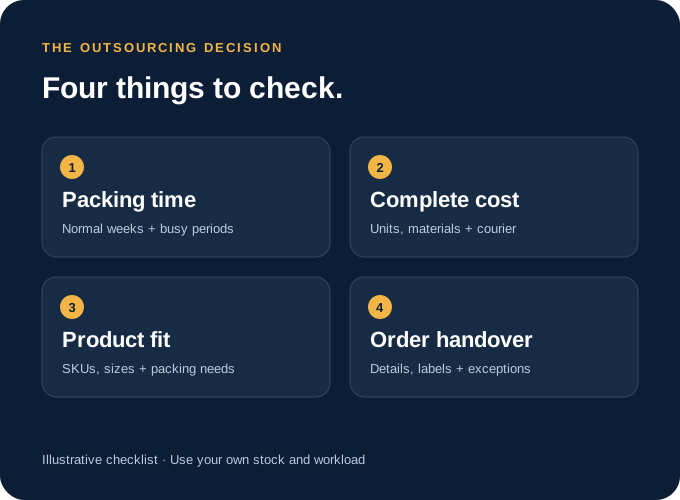
Packing can fit comfortably around a small store until receiving stock, locating variants, printing labels and answering delivery questions begin competing for the same hours. Look at where work is slipping: are product listings delayed, parcels waiting for labels, or stock counts becoming difficult to reconcile? Record the specific problem before looking for a fulfilment provider.
A quiet week and a campaign week can create very different demands. Note both, along with units per order and any unusual packing. Monthly order volume is useful for a quote, but it does not explain the whole workload. A mixed basket with fragile items needs a different discussion from a single straightforward product.
Measure a normal week instead of guessing
Keep a simple log of time spent receiving, finding products, packing, preparing labels, arranging handovers and dealing with exceptions. Separate the physical parcel work from seller tasks you may continue doing after outsourcing, such as customer service and supplying order instructions.
Use your own sample. If a few difficult orders account for much of the time, describe those products in the quote request rather than relying only on an average.
Compare the complete cost and charging basis
Shopify’s cost guidance treats fulfilment as a wider set of receiving, storage, handling, shipping and related costs. For your decision, compare the same work on both sides: your current materials, delivery charges and time against the provider’s written scope.
Ask whether each charge applies to a unit, order or parcel. One Shopify order can contain several units. Check materials, courier responsibilities, additional preparation, returns and any minimum commitments. Compare the standard-rate period as well as an introductory offer so the decision remains useful after the first month.
LuxFlow’s published UK parcel rates include packaging, with free storage and no picking fees. There is no minimum monthly fee or minimum/maximum order-volume limit. Courier/postage costs are separate; agree any special preparation for your stock. The whole-quote checklist helps organise those questions.
Make sure the order handover fits your routine
Write down how an order will move from your Shopify store to the warehouse. Who identifies the product, confirms quantity, supplies the label and updates an instruction when a customer changes an order? Ask how errors or missing information are reported.
LuxFlow’s described workflow uses your product and quantity selections and supplied shipping labels through its client portal. Discuss that routine with the team. A warehouse supporting Shopify orders does not, by itself, establish automatic order import, stock synchronisation or tracking updates in your store.
- Use consistent SKUs for every size, colour and bundle.
- Agree how shipping labels and packing instructions are supplied.
- Clarify responsibility for changes, cancellations and customer communication.
- Set out the instruction needed when a returned item arrives.
Check product fit and working arrangements
Share product dimensions, weight, variant count and any fragile or special-handling needs. Explain the packaging standard your customers expect, including any branded materials or inserts you would like discussed. Confirm suitability and arrangements before sending stock.
Ask about receiving, processing and courier collection separately, especially ahead of a campaign. Agree a contact route for shortages, damaged arrivals and incomplete labels. A clear exception process is part of the service decision; it cannot be replaced by a general promise of fast dispatch.
Turn the review into a practical next step
- Your packing workload is measured across normal and busy periods.
- The quote covers your actual products and order mix.
- The charge basis and standard-rate costs are understood.
- The label and order handover is workable for your team.
- Product suitability, packing requirements and timings are agreed.
- Returns instructions and exception contacts are clear.
If those points are clear, you can assess whether outsourcing suits your store. If several remain unanswered, use them as questions for the provider. There is no substitute for a stock-specific conversation when deciding the scope you need.
Send LuxFlow your product profile, approximate monthly orders, units per order and the work you want handled. Use the first-stock delivery checklist once the setup is agreed.
Sources & further reading
- Shopify: fulfilment cost categories ↗ — Official background for the full-cost comparison.
Reference checked on 13 October 2026. The time example and seller checklist above are illustrative LuxFlow guidance; they do not claim measured savings or a universal order threshold.