Start with the charging unit
Before comparing two quotes, check whether each price applies to an order, a unit, a parcel or a storage period. Those are different measures. One customer order might contain several units, and one dispatch might use more than one parcel. A price comparison needs the same product mix and the same charging basis.
Write down a typical week of orders: products sold, units per order, parcel sizes and any special preparation. Send the same information to every provider. This gives the conversation a practical starting point and makes differences in scope easier to spot.
LuxFlow’s UK rates, side by side
| Parcel category | Standard / unit | First month / unit |
|---|---|---|
| Large Letter | £0.80 | £0.40 |
| Small | £1.00 | £0.50 |
| Medium | £1.20 | £0.60 |
LuxFlow offers 50% off UK fulfilment for the first month, with free storage and no picking fees. Share product dimensions and weight to confirm the parcel category. The categories follow Royal Mail size guidance. Confirm offer eligibility and any product-specific preparation in your written quote.
These are LuxFlow fulfilment rates, not Amazon’s own FBA fees. Amazon FBA preparation is discussed against the products and preparation work required. See LuxFlow’s pricing page for the rate comparison.
Separate the rate from the complete cost
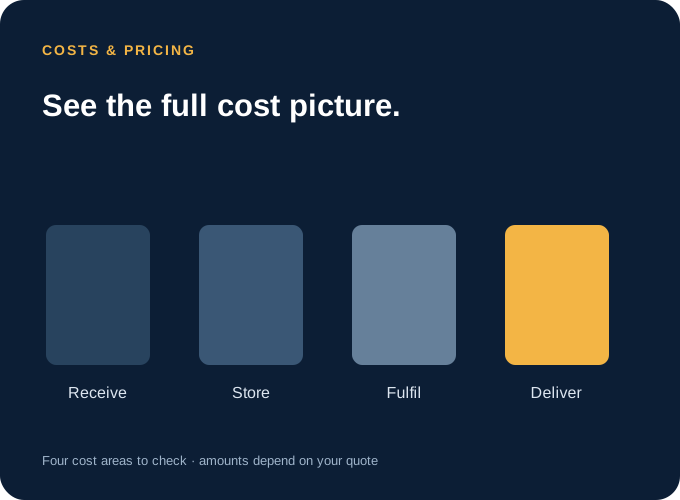
Shopify’s fulfilment-cost guide explains that warehouse work and customer delivery sit within a wider cost picture. For your own quote, turn that picture into a short checklist rather than assuming every provider bundles the same services.
| Cost area | Question to ask |
|---|---|
| Receiving | How are stock arrivals counted, checked and recorded? Is any additional handling charge applicable? |
| Storage | Is storage free for my stock profile, and what conditions or limits apply? |
| Fulfilment | What exactly is charged per unit, and how are multiple-item orders treated? |
| Materials | Are boxes, mailers, protection and branded inserts supplied or charged separately? |
| Courier | Who buys the shipping labels and arranges collection? Which delivery costs belong in the quote? |
| Returns and extras | How are inspection, relabelling, special preparation and returns handled and charged? |
| Tax and terms | What is the VAT treatment, and are any setup or minimum charges applicable? |
LuxFlow includes packaging, offers free storage and charges no picking fees. There is no minimum monthly fee and no minimum or maximum order-volume limit. Courier/postage costs are separate; tax treatment and special preparation still need to be understood for your products.
An example you can check yourself
Repeat the calculation for your expected units using the correct category. Keep the first-month estimate and the standard-rate estimate in separate columns so you can plan beyond the introductory period. Add any other agreed cost lines without quietly treating a fulfilment rate as a total delivered price.
Use a like-for-like comparison
- Give every provider the same SKU list, dimensions, weights and expected volumes.
- Compare the regular rate as well as any introductory offer.
- Check the charge basis for bundles and orders with several items.
- Ask how changes in your stock profile affect the quote.
- Get the agreed scope and any additional charges in writing.
A useful decision balances the full cost with the work you need done. Clear receiving records, a workable order handover and agreed collection arrangements matter alongside the headline price.
Sources & further reading
- Shopify: understanding fulfilment costs ↗ — A broader explanation of fulfilment cost categories and cost measurement.
External references checked on 13 October 2026. Use the current platform instructions when preparing a live shipment or processing a return.