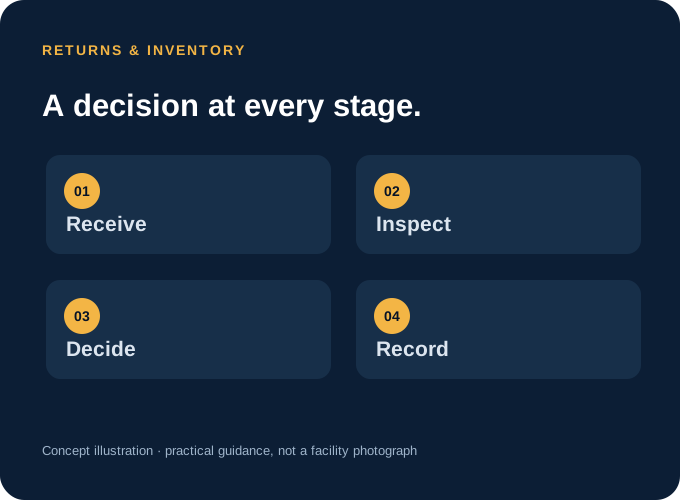
Separate the warehouse task from the customer decision
A useful returns workflow makes responsibilities clear. Receiving a parcel, checking its contents and recording condition are physical handling tasks. Deciding eligibility, refunding a customer or authorising an exchange belongs in your agreed seller workflow. Make the handover between those tasks explicit.
For a Shopify store, the platform’s official returns guidance explains how returns, exchanges and refunds are managed in the admin. That platform process is separate from agreeing who physically receives and inspects the returned stock.
1. Match the return to a product and order
Ask for enough information to connect the parcel with the original order: an order or return reference, the expected SKU, quantity and the instructions supplied to the customer. A return with no reference should be held for identification rather than added to available stock by assumption.
- Record when the parcel was received.
- Check what arrived against the expected return.
- Note missing components or a different product variant.
- Flag unclear identification for the seller to resolve.
2. Record condition before changing availability

Agree the condition checks relevant to your products. A boxed accessory, clothing item and fragile homeware product can need different checks. A simple return record can distinguish packaging damage, item damage, missing parts and products that still require an assessment.
| Suggested status | Meaning for the seller |
|---|---|
| Awaiting assessment | Received, but not yet cleared for resale. |
| Suitable for restock | Condition has been assessed against the agreed criteria and the seller’s instructions allow restocking. |
| Hold for decision | A discrepancy or concern needs a seller instruction. |
| Not suitable for resale | The agreed assessment has identified a reason to keep the item out of available stock. |
These are suggested planning statuses, not a claim about automatic features in the LuxFlow portal. Decide the labels and reporting process you need when arranging your returns workflow.
3. Use an agreed instruction for the next action
The seller might authorise restocking, replacement packing, a further check or another action. Those decisions should be traceable to the return record. Avoid treating a damaged outer box as proof that the product is fine, or treating an unopened-looking package as a completed inspection.
For a replacement or exchange, provide the new product, quantity and shipping-label information through the agreed outbound workflow. Keep the inbound return reference linked to the seller’s decision so the record explains why a stock quantity changed.
An illustrative returns handover
This approach is useful when several people handle customer service and stock. The seller can respond to the customer using a clear condition report, while the warehouse knows which physical action has been authorised.
What to agree before returns begin
- The return address and references customers should provide.
- The condition checks and evidence you need for each product type.
- Who decides refunds, exchanges, restocking and other actions.
- How inspection or extra handling is priced.
- How exceptions are escalated and stock changes recorded.
LuxFlow’s service pages describe returned items being received, inspected and processed against agreed instructions. Discuss the scope your products need through the quote enquiry. Free storage and no picking fees do not by themselves define the charge for every returns task.
Sources & further reading
- Shopify Help: returns and exchanges ↗ — Official guidance for managing returns and exchanges in Shopify.
External references checked on 13 October 2026. Use the current platform instructions when preparing a live shipment or processing a return.